

Nerdy notes...

AI, Asparagus, and Asking Better Questions: Reflections from EuroSense 2026
AI was everywhere at EuroSense 2026. So were some very human reminders of what makes sensory science valuable. From digital twins and an imaginary “asparagus method” to palate cleansers and hallway conversations, here’s what the conference made me think about where our field is headed.
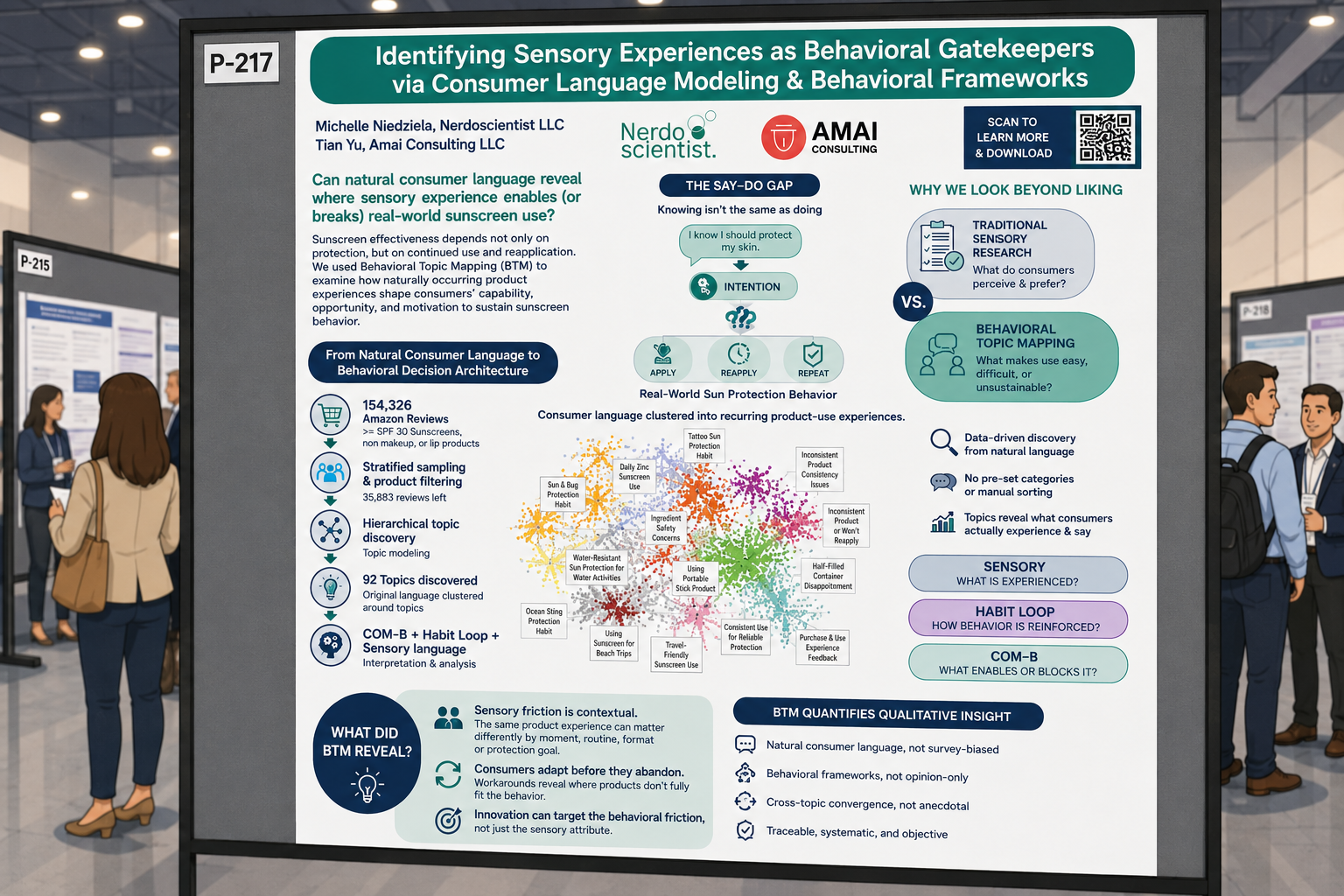
Beyond Liking: What Consumer Language Can Tell Us About Whether Sunscreen Actually Gets Used (Eurosense 2026 poster)
We know a lot about what consumers perceive and prefer—but less about what happens when products have to fit into real life. Our EuroSense 2026 poster uses sunscreen to explore how natural consumer language can reveal the sensory friction, workarounds, and moments that shape whether a product actually gets used.
What Is Behavioral Topic Mapping?
Trend reports tell us what consumers are talking about today, but not necessarily where behavior is headed tomorrow. Learn how Behavioral Topic Mapping combines behavioral science and AI-assisted pattern recognition to uncover the motivations, tensions, and unmet needs that connect seemingly unrelated consumer trends.

From Fraud to Foresight: a Double-Edged Sword of Synthetic Data in Market Research
At this year’s AChemS meeting, I gave a talk on AI in sensory research. One of the demonstrations I gave was intentionally provocative: I asked ChatGPT to simulate a consumer research study using MaxDiff and Implicit Association Testing (IAT) to explore the perception of "freshness" in home fragrance products.
Let me be clear: the goal was not to fake data but to stress-test a study design. By simulating how people might respond, I wanted to explore gaps, assumptions, and how well our methods differentiated between products. Consider it a pilot study by proxy.