

Nerdy notes...
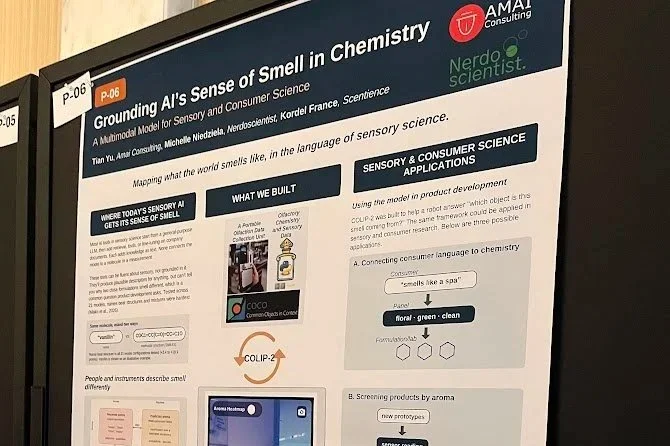
AI Can Talk About Smell. But Can It Smell?
AI can describe what something smells like, but can it actually connect those descriptions to chemistry? Exploring how multimodal AI, chemical sensors, and human language could bridge the gap between physical measurements and sensory experience—and why sensory scientists are essential to making these models meaningful.

Different Methods, Different Minds: What Happens When Consumers Don’t Have Time to Think?
When implicit and explicit consumer measures disagree, does one reveal the ‘real’ consumer? New findings suggest a more interesting question: when, why, and for whom do the methods diverge?

AI, Asparagus, and Asking Better Questions: Reflections from EuroSense 2026
AI was everywhere at EuroSense 2026. So were some very human reminders of what makes sensory science valuable. From digital twins and an imaginary “asparagus method” to palate cleansers and hallway conversations, here’s what the conference made me think about where our field is headed.
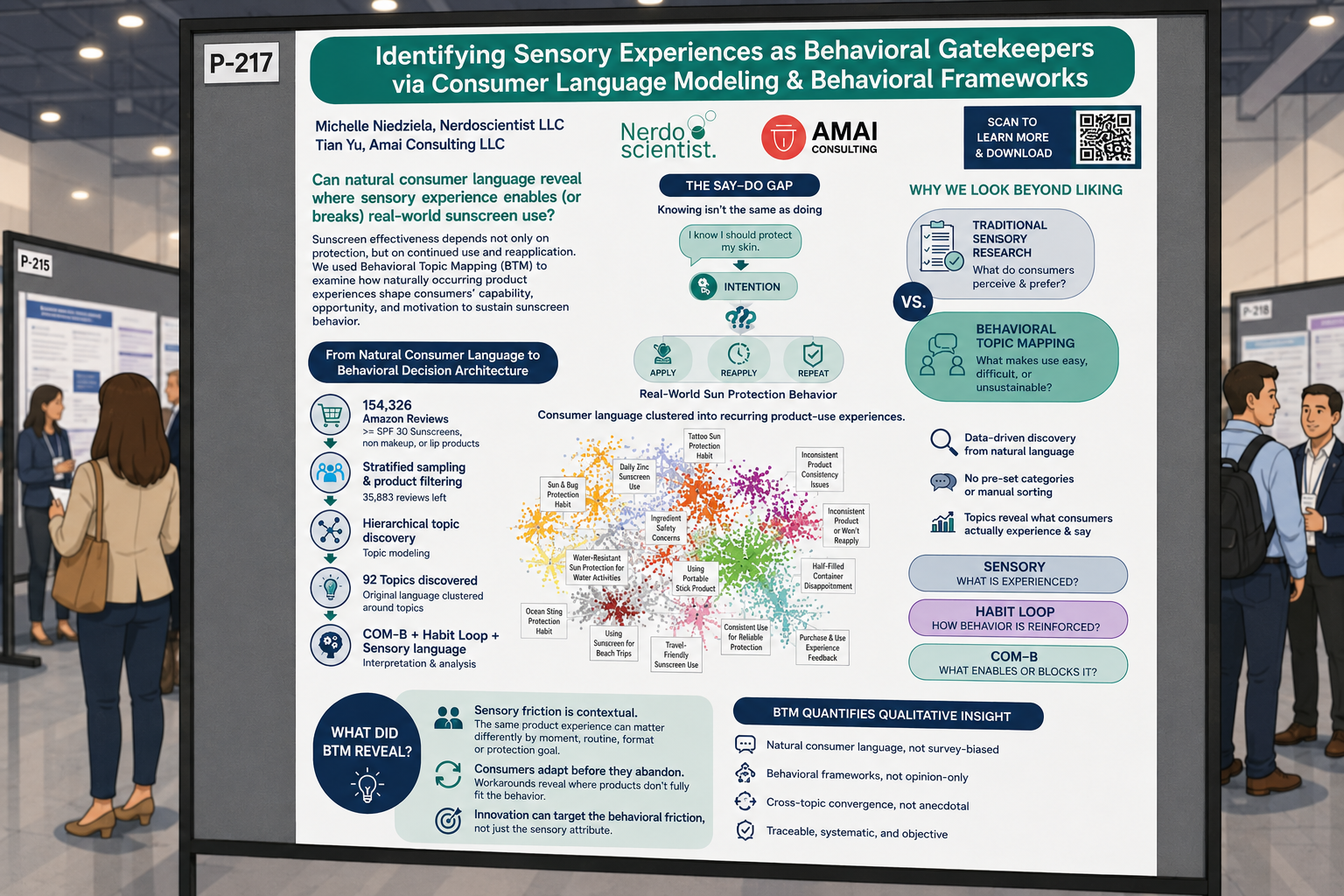
Beyond Liking: What Consumer Language Can Tell Us About Whether Sunscreen Actually Gets Used (Eurosense 2026 poster)
We know a lot about what consumers perceive and prefer—but less about what happens when products have to fit into real life. Our EuroSense 2026 poster uses sunscreen to explore how natural consumer language can reveal the sensory friction, workarounds, and moments that shape whether a product actually gets used.
A Nerdoscientist’s Year-End Guide to Conferences That Actually Matter
Now in thinking about the upcoming list of conferences I think that rather than asking “What’s the best conference?”, I think the better question is:
“What kind of thinking do I want to be exposed to right now?”

Pangborn 2025: Sensory Science in Full Spectrum
I was super excited for this meeting since it’s sorta in my backyard (I live in the Philly suburbs). But also because I got to be part of the organizing committee.

Why We Always Have Room for Dessert: A Nerdoscientist’s Take on ISN
I walked into ISN nervous, unsure how I’d fit among such an extraordinary roster. I walked out feeling energized, inspired, and grateful to have contributed.
Two days of rich, cross-disciplinary science reminded me that understanding food, flavor, and behavior requires more than treating people like machines. We need to embrace the quirks, the biases, and yes, even the cookie stomachs, that make us human.

From Fraud to Foresight: a Double-Edged Sword of Synthetic Data in Market Research
At this year’s AChemS meeting, I gave a talk on AI in sensory research. One of the demonstrations I gave was intentionally provocative: I asked ChatGPT to simulate a consumer research study using MaxDiff and Implicit Association Testing (IAT) to explore the perception of "freshness" in home fragrance products.
Let me be clear: the goal was not to fake data but to stress-test a study design. By simulating how people might respond, I wanted to explore gaps, assumptions, and how well our methods differentiated between products. Consider it a pilot study by proxy.