

I came home from the Society of Sensory Professionals meeting in Louisville with new connections, ideas I want to explore, and a familiar collection of questions about where our field is going.
I also came home tired. Between speaking, moderating, presenting collaborative work, judging posters, and co-leading a workshop, I had a full schedule. I was grateful for those opportunities, although they meant I experienced only part of the meeting. There were talks I wanted to attend and posters I didn’t get enough time to explore.
That makes this a personal reflection, shaped as much by the conversations between sessions as by the presentations themselves. For me, that has always been a large part of SSP’s value: the chance to work through questions with people who understand the science and the realities of doing the work.
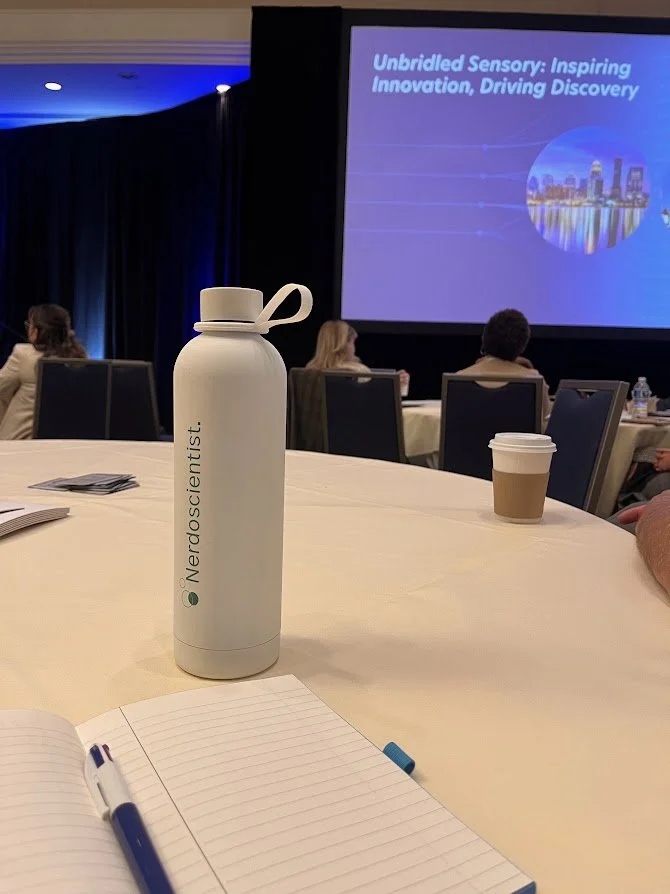
A nerdo visits SSP2026.
What does another method help us understand?
One of the projects I was particularly pleased to be part of was a poster with Kevin Kim and colleagues at Givaudan, exploring cocoa reduction through multiple measures of product experience.
The question was straightforward: if you reduce cocoa and then use a taste technology to restore sensory characteristics, have you also restored the consumer experience?
The study combined trained-panel flavor and holistic profiling with consumer liking, just-about-right ratings, and implicit associations. Those approaches revealed different aspects of the reformulation.
The technology restored cocoa intensity and brought back impact and complexity, but the holistic profiling also indicated reduced integration. Meanwhile, consumers liked the reduced-cocoa version most. Their just-about-right ratings suggested that the full-cocoa and technology-added versions were too chocolate-forward. Implicit associations with the reduced-cocoa version included comforted, delicious, and familiar.
That is why triangulation matters. Measuring successful restoration of a sensory characteristic would have answered only part of the question. Looking across the measures gave us a fuller basis for evaluating what the reformulation accomplished for consumers.
I think this is a great example of how to best incorporate new approaches like implicit measures into sensory and consumer research. Each method needs a reason to be in the study. What does it contribute? Where does it agree with other evidence, and where does it reveal something different? How will that information affect the decision?
I think this also connected to my presentation comparing implicit and explicit approaches. When methods produce different patterns, we need to understand what each task asks of the participant and what conclusions the evidence supports.
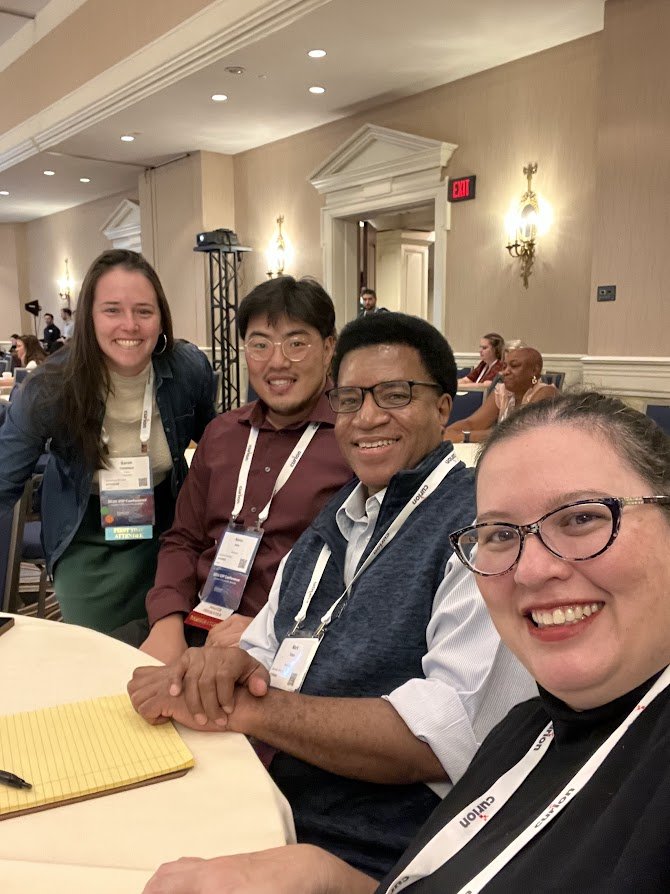
A nerdo hangs with the Givaudan crew at SSP2026
When we can detect more, what does it mean?
When I first heard that I was going to me in a methods session, I was a little confused. Benoît Rousseau does amazing data and analytics work with The Davis Sensory Institute. But how would our (my work with RIWI and P&K on implicit vs explicit methods) fit in with his? Also, why was he speaking twice in a row? Ultimately, I was glad to hear Benoît’s presentations on advanced analytical approaches and visualization beyond familiar tools such as PCA. They prompted a question I found that I kept returning to: what is ground truth when we measure perception?
When an approach reveals additional statistically significant differences, how do we establish what those differences mean? Do they reflect something people reliably perceive? Something that changes preference or use? Something that matters to a product decision?
Greater sensitivity can be valuable. Understanding the meaning of that sensitivity is part of evaluating the method.
As our analytical capabilities grow, I want us to keep discussing the relationship between statistical separation, perceptual relevance, and the experience someone has outside a study. A method can help us see more while leaving us with further questions about what deserves action.
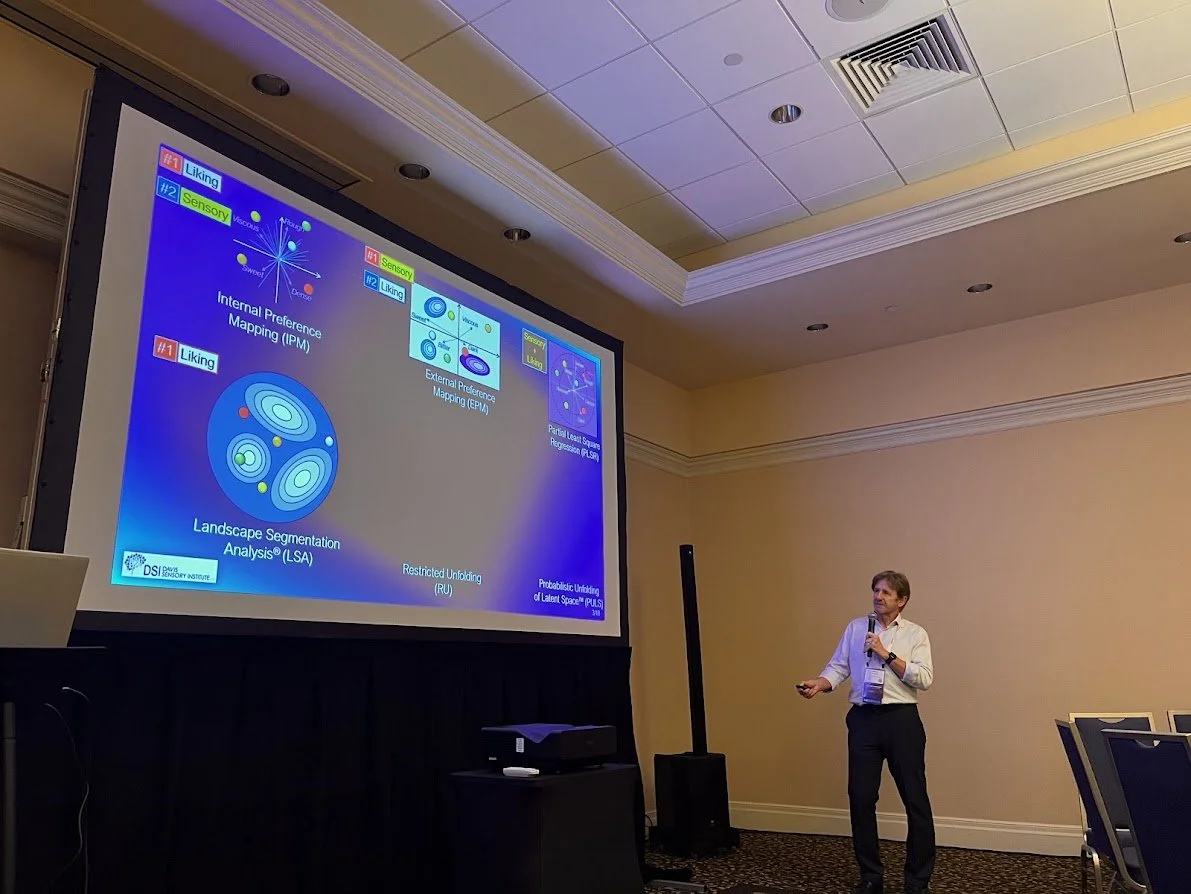
Benoît Rousseau speaking at SSP2026
Expanding what we can do with AI
AI was another area where I left with ideas to pursue.
But I mean, is it even a conference anymore if the speakers don’t talk about AI?
Tian Yu (Amai Consulting) did a great job representing our work as a speed poster presentation on our Behavioral Topic Mapping, which connects patterns in consumer language with behavioral science frameworks. The interest in that work, including conversations that have already led to new projects, reinforced the value of showing concretely how an approach can address a research question.
I already use AI pretty extensively, but the meeting (and Aigora’s AI workshop) encouraged me to consider exploring more agentic workflows: ways to support a broader sequence of research tasks while keeping my scientific approach and judgment central. It’s always good to learn something new.
My AI motivation is really about expanding the ground I can cover. I want to be able to investigate more questions, explore connections more thoroughly, and develop approaches that could help the clients I consult for. But I still want to be the person directing the work, bringing the ideas and deciding what the results mean.
In line with that, I had another poster on exploratory olfactory work with Tian and Kordel (Scentience) offered another glimpse of what expanded capabilities might make possible. I still like describing the ambition as “C-3PO, but with smell”: a system that could enter a situation, use contextual information, and infer what might be producing the odors.
It’s more of a future-facing analogy, rather than a claim that we have built such a system. But what we’ve done makes the research possibility tangible. How might combining different sources of information eventually help us interpret an odor situation and identify likely sources?
These possibilities make me curious. They also make practical education valuable. Clearly, sensory professionals are experimenting with AI in different ways, and there is room for more shared learning about how we direct, evaluate, and apply it.
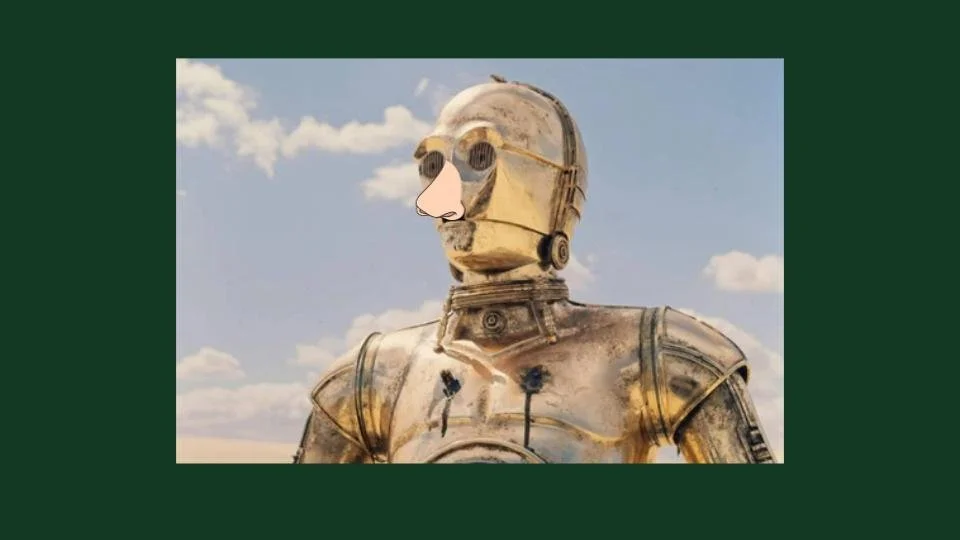
Slide from our AChemS2026 presentation
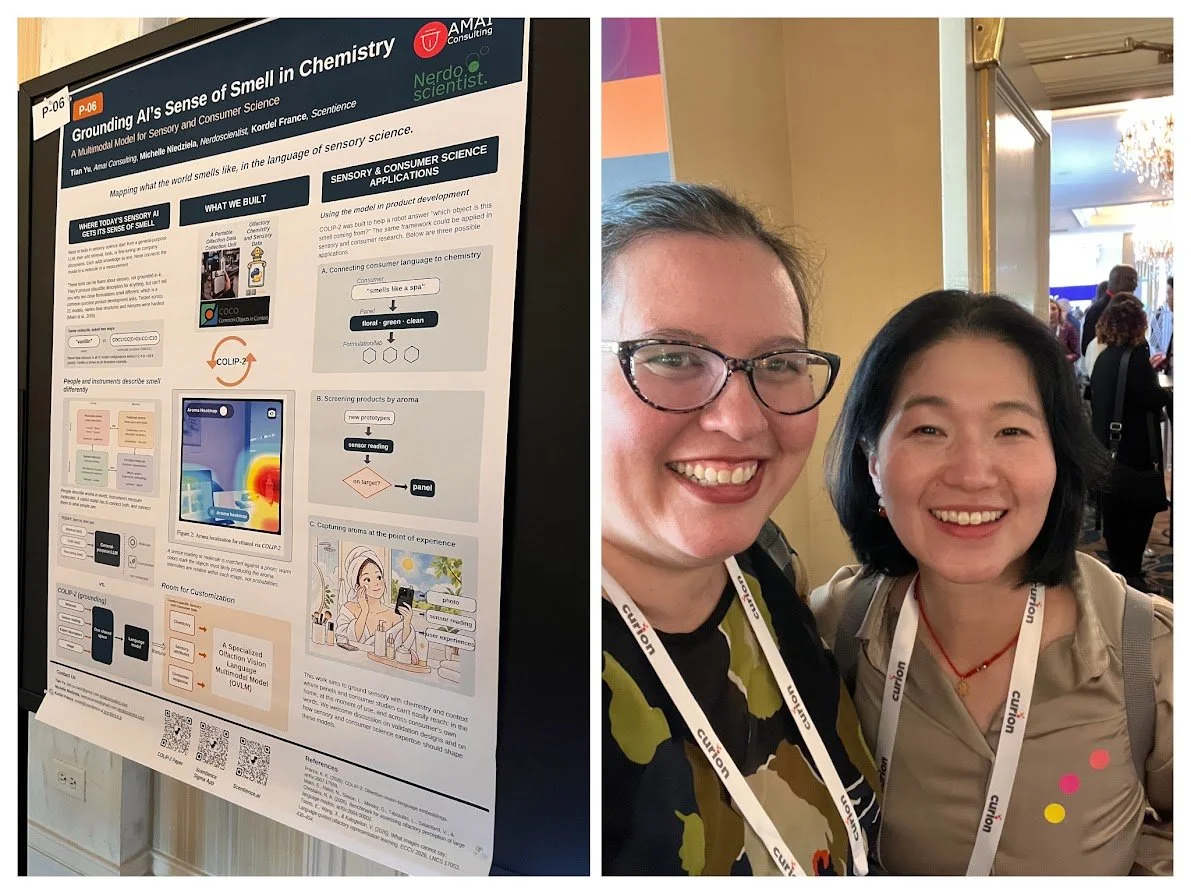
Our AI-laden poster research and Tian and I during a poster session at SSP2026
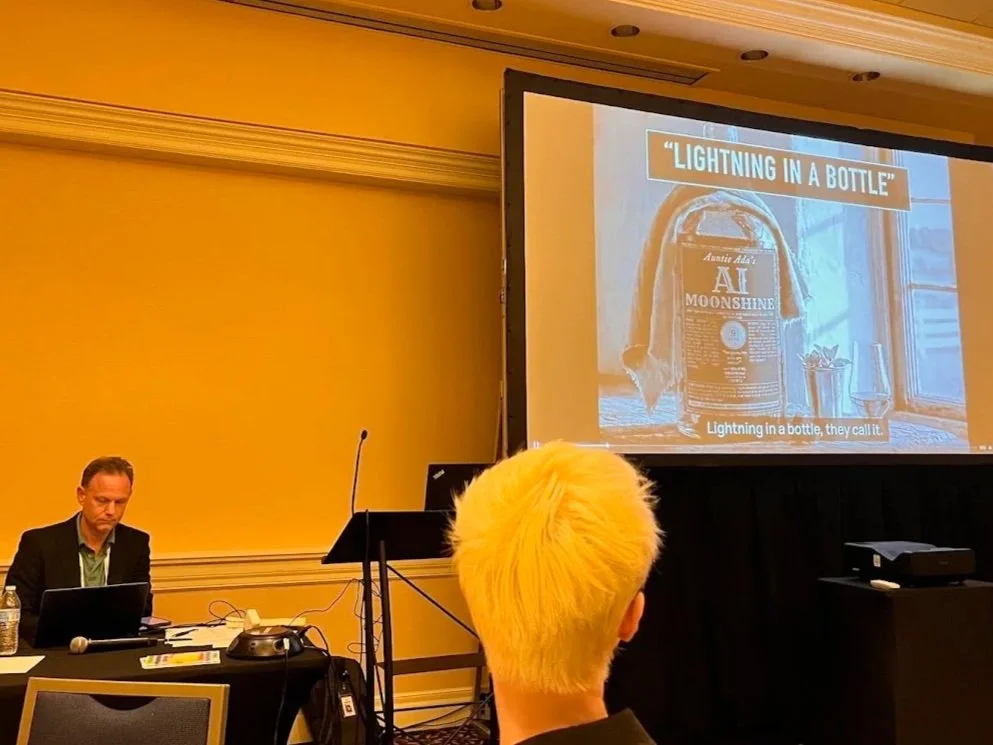
John Ennis sharing his generated old-timey style video about AI slop at SSP2026
Making room for the methods people actually use
Some of my most interesting conversations concerned basic sensory practice.
Speaking with Ivy Koelliker, an independent consultant focused on descriptive training, and people working at smaller research agencies brought up the space between formal descriptive methods and what a particular project can support.
Not every budget accommodates a full QDA or Spectrum study. Researchers sometimes need to use rapid descriptive approaches or develop methods that sit somewhere between established protocols to make it work. That raises questions worth discussing openly. How are those adaptations being made? What do they preserve? What changes? How do we assess whether they remain suitable for the decision? How is the actual practice of sensory in the wild adapting to a changing landscape and are we all keeping up with it?
Descriptive training is not my specialty, so I raise these as questions that emerged from conversations with practitioners. I would definitely welcome more opportunities to hear their answers or at least help to foster those discussions.
A field interested in innovation also needs sustained attention to its foundations (and it’s evolutions). Understanding how established methods are evolving in everyday practice seems especially valuable when teams face real constraints on time and money.
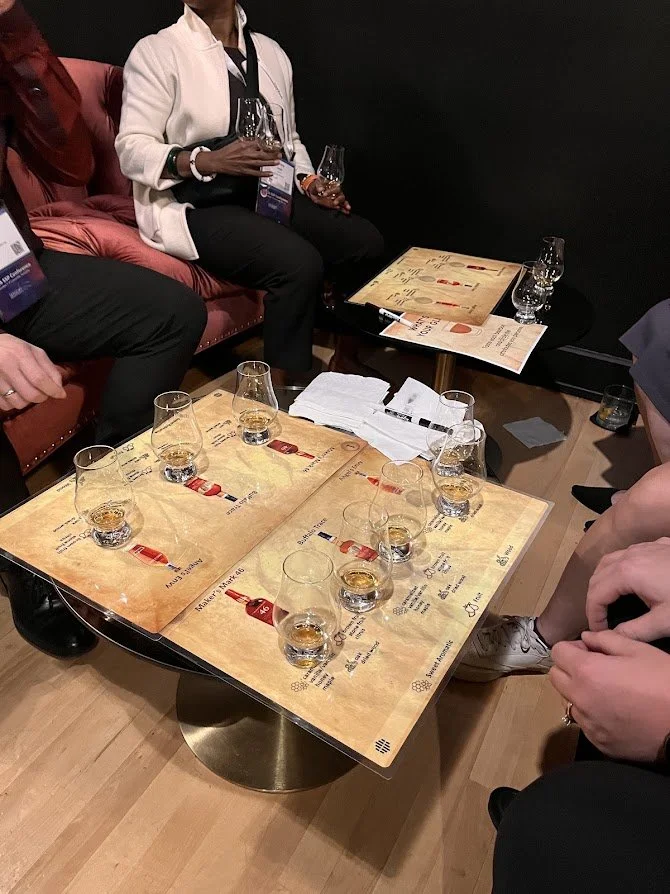
Bourbon tasting courtesy of Sensory Spectrum at SSP2026.
Sensory science beyond food
One of my personal highlights was Samantha Tucker Samaras’s (SVP at Unilever R&D) scientific keynote. Having invited Sam (or rather suggesting her as the keynote and making the right connections) to speak, I was particularly happy to see how her presentation connected with the audience. I had the privilege or work with Sam during my first industry job at J&J Consumer. And hearing her talk I can see how getting to work with such an amazing team back then really helped shaped the kind of industry scientist I’ve become.
She moved from specific biological research in skincare to sensory input and psychological wellbeing with clear, compelling storytelling. The science had depth, and the relevance was accessible.
I appreciated the skincare focus within a meeting that remains heavily oriented toward food. It created an opportunity to consider sensory science through another familiar part of daily life. Her presentation showed how a different product category can open a shared scientific conversation.
And I’d love to see more of that breadth, alongside contributions from a wider range of companies, career stages, and professional backgrounds. I appreciated my own visibility at this meeting, and that also made me reflect on how we create opportunities for others to enter the conversation.
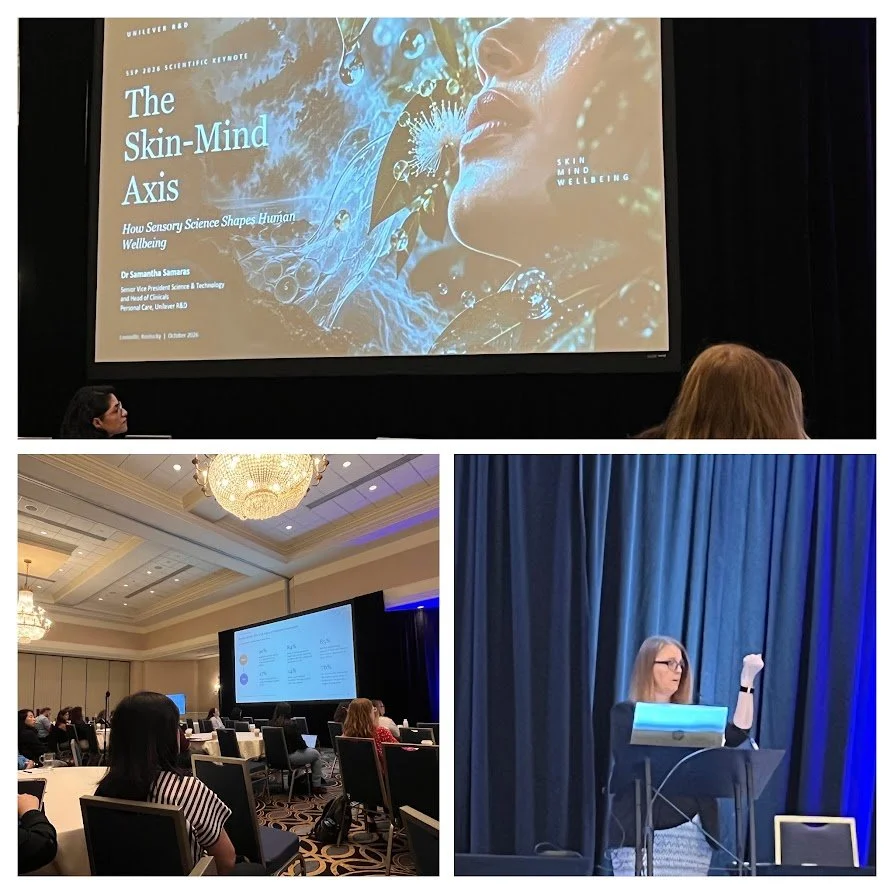
Sam’s amazing scientific keynote session at SSP2026
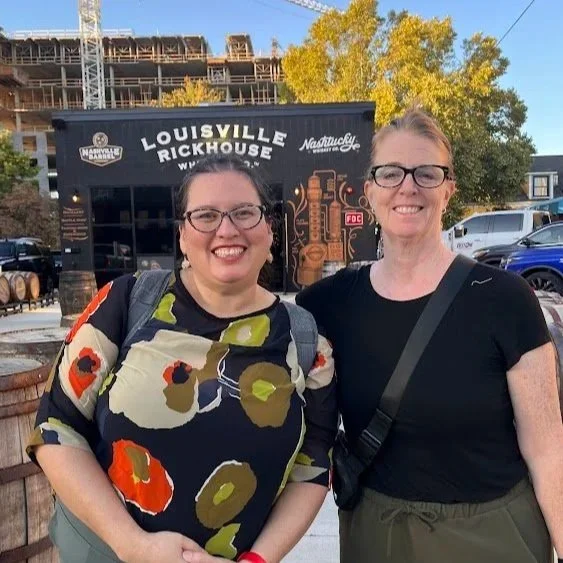
Getting to reconnect with Sam over dinner at SSP2026
Connection takes more than putting people in the same room
The workshop Tian and I led, “Unbridled Together,” was a personal highlight.
And if you missed it, please join our LinkedIn group to continue the conversation.
Beforehand, I wondered/worried how people would respond to the very active activities. Not exactly your typical conference workshop, we asked a lot of participants. But during the session, I really did see participants taking the activities seriously, moving around, meeting new people, and working together. The feedback and conversations afterward were also really encouraging. Independent consultants clearly saw possibilities in combining their expertise, and I met people with ideas I definitely want to keep discussing.
That experience reinforced something I have appreciated at other scientific meetings: smaller communities can help people find their way into a larger professional gathering.
When I attended Society for Neuroscience back in the day with upwards of 35,000 neuroscientists (or as an ex-boyfriend in grad school called it 35,000 nerdoscientists giving me a handle I’d use from then on) in one place, the scale could be overwhelming. Alumni gatherings, special-interest meetups, and connections around activities such as music or dance helped make it feel like a community. They offered an entry point even when you maybe did not already know the right people or felt left out.
I was encouraged by SSP’s efforts to foster connections with great events like the Connectors Dessert Reception. And it seems there is room to build on our connections through consulting networks, communities around shared identities, and topical groups that continue between meetings.
Practical access matters, too. I struggled to reach the regular posters on the tenth floor while most of my activities were on the first floor and mezzanine. My judging assignments were speed posters, which I could see presented separately from the other posters on the mezzanine level. I can’t speak for everyone’s experience, but I wished I had spent more time with the regular posters and even the vendors. Making emerging work easy to encounter is another way to broaden the scientific conversation.
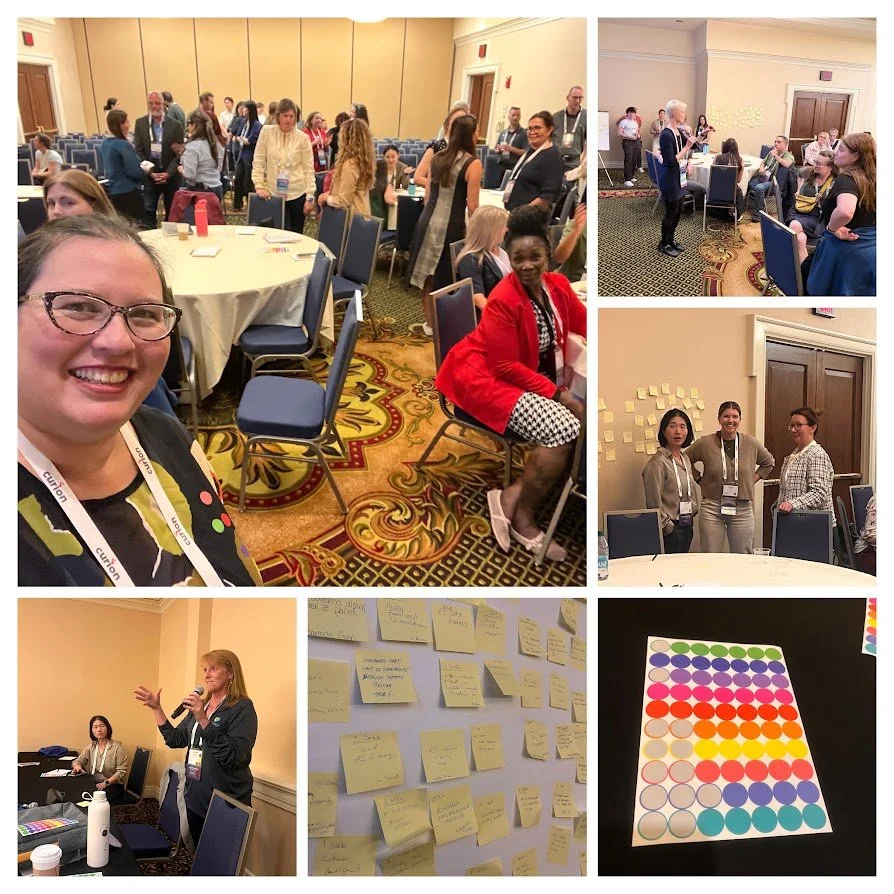
Unbridled Together workshop, making participants do the work at SSP2026
The questions I’m carrying forward
I left SSP encouraged by the people I met and interested in what we might do together next. I also left with questions I want to keep asking:
What does an additional method contribute to the decision?
How do we evaluate the adapted sensory methods people actually use?
How do we create more ways for people and perspectives to enter the conversation?
These questions connect much of what I do as a behavioral neuroscientist and consultant. I’m very interested in how methods work together, what they allow us to understand about experience, and how that understanding helps someone make a better decision.
SSP gave me examples to think with and collaborators to think alongside. I look forward to continuing those conversations, including through The Sensory Collective taking shape after our workshop.
If one of these questions connects with your own work, I would love to hear what you are seeing. Those exchanges are often where the next useful research idea begins.
