

What It Means To Be a “Research Doula”
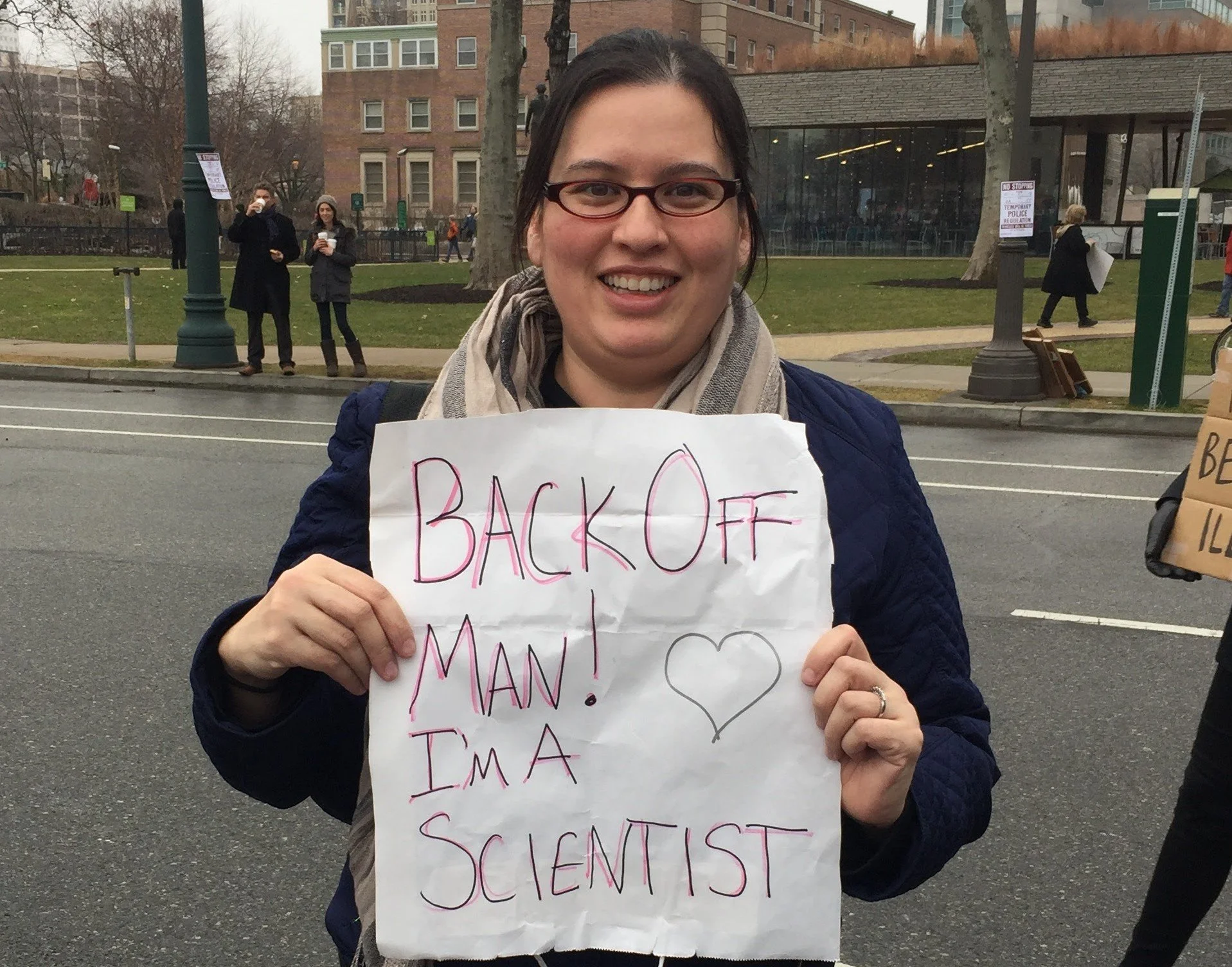
When I left corporate life and started Nerdoscientist just over a year and a half ago, I didn’t have a perfect business model, a 10-step plan, or a clever tagline. What I did have was nearly 20 years of experience doing this strange but wonderful job at the intersection of neuroscience, psychology, sensory science, and consumer research, and a strong desire to keep doing the parts that really excited me.
I also had a lot of help. I strongly believe in surrounding yourself with people smarter than you. It keeps you motivated and learning. And I don’t know about you, but I love always having an idea of who I can reach out to with a question or to recommend for something.
And I’m lucky to know people like Lori Rothman, Janet McLean, and Tom Rich, who openly shared their hard-earned wisdom about consulting. And Federica Stirone, who patiently helped me turn my chaotic energy into a brand presence that actually reflects who I am.
One of the best pieces of advice I received early on was from Lori: If you can articulate what you do in three pillars, it will help you understand your value and help others see it too.
That was a helpful challenge because my work was difficult to explain in the neat categories the industry is used to: “quantitative,” “qualitative,” “neuro,” “innovation,” etc. It has always been a braid of methods, frameworks, conversations, and creative problem-solving.
When I finally sat down to define my pillars, I realized they weren’t new. They were the core of how I’d worked all along:
Educating. Designing. Advocating.
1. Educating: Translating the abstract into the actionable
Neuroscience and psychology can sound intimidating, academic, or mystical depending on who’s doing the talking. But their value in industry isn’t about jargon. It’s about clarity.
Education, for me, has meant:
Running internal journal clubs to help teams navigate new science
Designing workshops to translate methods into real business decisions
Writing literature reviews on tools, constructs, and measurement issues
Breaking down why a method works (or doesn’t) without the hype
When clients tell me, “We finally understand this, and can use it,” that’s success.
2. Designing: Asking better questions, and designing studies that can answer them
Research design is sometimes treated like plumbing. It’s functional, modular, plug-and-play. In reality, every choice influences the outcome: the question asked, the tool selected, the sequence of stimuli, the environment, the participant mindset.
Design work has meant exploring those subtle levers:
Crafting research questions that are truly actionable
Choosing tools that match the question, not the trend
Iterating methods for better behavioral sensitivity
Breaking the mold when necessary
Sometimes that looks like adding behavioral coding to an eye-tracking study.
Sometimes it means pairing a Stroop task with physiological measurement during product experience.
Sometimes it’s about designing for peak experiences rather than average ones.
To me, research design isn’t about novelty. It’s about truth.
3. Advocating: Giving clients a voice in a noisy ecosystem
This is the pillar I didn’t expect, but it’s the one I’ve gravitated toward the most.
Many clients come to me not because they don’t know what they want, but rather because they can’t get others to listen. They may be skeptical of a tool but don’t have the language to explain why. They want rigor, but are being sold simplicity. They want context, but are being offered dashboards.
Advocacy has meant:
Helping teams articulate concerns to vendors
Translating research needs into specs that partners can execute
Getting internal stakeholders aligned on what matters
Being the neutral, external voice that makes hard conversations easier
It turns out a lot of organizations don’t need more data.
They need someone to stand with them while they pursue better data.
Why I Started Calling Myself a “Research Doula”
The advocacy piece is what led me, somewhat jokingly at first, to use the term “research doula.”
Doulas don’t give birth to the baby.
They guide the process.
They support the parent.
They help navigate uncertainty.
They bring knowledge, framing, and calm.
They don’t take over. They hold space for the person doing the work.
That is the closest analogy I’ve found to what I do.
I don’t own panels or labs or platforms.
I don’t drop in, run research, and disappear.
I help clients:
Clarify what they need
Understand the landscape
Select partners and tools wisely
Design studies with intention
Communicate expectations and limitations
Advocate for rigor and feasibility
Reflect on outcomes with nuance
I’m there before, during, and after the research.
Not running it, but ensuring it has the best possible chance of coming into the world healthy.
A research doula. I like it. It works.
Looking Back at past year or two: Freedom, Curiosity, Integration
As 2025 winds down, I’ve been reflecting on this weird transitional period of leaving a structured corporate system and entering a space where the guardrails are gone, but so are the constraints.
I feel more free to:
Explore emerging tools without pressure to champion any single one
Build relationships with vendors rather than compete with them
Use my neuroscience and psychology training deeply, not superficially
Prioritize good science over familiar templates
I’m not simply “doing consulting.”
I’m building a practice that feels like the most authentic version of my professional identity.
And honestly?
It’s fun.
It’s intellectually challenging.
It stretches me in the ways I want to be stretched.
I feel excited for what comes next.
Where This Is Going
I don’t know exactly where this work will take me, but I do know this: the problems companies are trying to solve in sensory and consumer experience are only getting more complex, more emotional, more contextual, and more human.
And helping teams navigate that complexity with science, creativity, compassion, and stubborn dedication feels like meaningful work to me.
Join me!
