

A Nerdoscientist’s Guide to Snacking Your Way Around the World
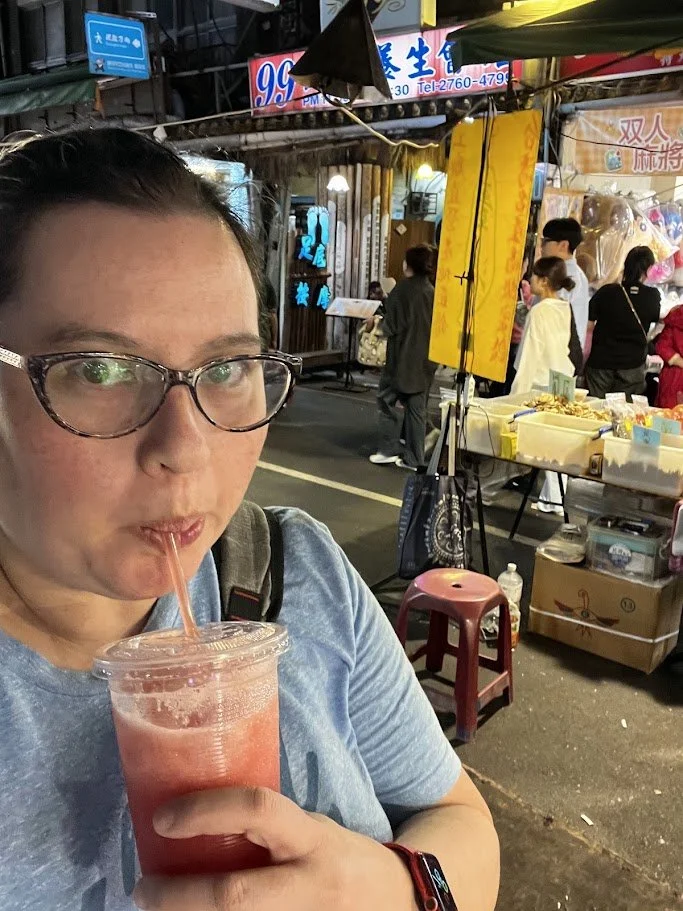
Enjoying watermelon juice in a Taipei night market (2025).
As summer starts to wind down, I've been thinking about one of the things my family loves most: traveling.
Travel has always been a big part of my life. In fact, a shared love of exploring the world was one of the things that brought my husband and me together. And once we had kids, we didn't really stop. Our girls have been traveling with us since they were babies, and over the years we've been incredibly fortunate to explore quite a bit of this wonderful planet together.
Now that they're in school, our adventures are largely confined to those hot summer months when school is out, which isn't always the ideal season for exploring some parts of the world! But we make it work. We recognize how incredibly privileged we are to be able to travel this way, and we try not to take that opportunity for granted. If we're going somewhere, we want to experience it.
And for me, a huge part of experiencing a place is through food.
I love wandering through food markets and grocery stores. I love trying things I've never heard of, ordering something without being entirely sure what I'm going to get, and discovering ingredients or ways of cooking that I want to bring home and try myself. Some of my favorite cooking ideas have come from meals we've eaten while traveling.
Of course, perhaps unsurprisingly for someone who has spent much of her career working in sensory and consumer science, I'm also fascinated by why things taste the way they do in different places and why people like them.
What tastes "normal"? What tastes “strange”? What combinations make perfect sense in one culture but seem completely unexpected to someone from another? How much of what we like is about the sensory properties of the food itself, and how much comes from familiarity, culture, expectation, memory, and experience?
Which brings me to one of our family's favorite (and decidedly less sophisticated) ways of exploring those questions.
What Potato Chips Have Taught Me About the World
Every family develops little traditions when they travel.
Some people collect magnets. Others buy Christmas ornaments or postcards (I actually do love postcards and send them to some key friends of mine like the amazing Rachel Herz, who also loves to travel and all things sensory).
Our family buys potato chips.
Not just one bag. Every time we visit a new country, or sometimes even a new city, we make a point of wandering into the nearest grocery or convenience store and searching for the most unusual flavors we can find. The stranger they sound compared to what we'd expect back home in the United States, the better.
Then comes the fun part.
We sit down together, open the bags, and everyone rates them. Which ones would we buy again? Which ones are terrible? Which ones surprise us? More importantly, why?
My daughters have become surprisingly thoughtful critics. They'll debate whether a flavor is too sweet, not salty enough, too artificial, or tastes exactly like the food it's trying to imitate. Sometimes we all agree. More often we don't.
It's become one of my favorite travel traditions.
Not just because I love chips (although I do).
Because it's actually a tiny and fun sensory research experiment we can all do together.
A Bag of Chips Is a Cultural Snapshot
As a behavioral neuroscientist and sensory researcher, I spend a lot of time thinking about how people experience products.
One of the first lessons you learn in sensory science is that there is no such thing as a universally "normal" flavor.
What's comforting in one country might be strange somewhere else. What's nostalgic to one culture may seem almost inedible to another.
Those expectations aren't accidents. They're learned through years of exposure.
A bag of chips is really a snapshot of those learned expectations.
When I see flavors I've never imagined before, I'm not asking, "Who would eat that?"
Instead, I'm asking, "What experiences made this flavor make perfect sense here?"
And that's a much more interesting question.
Some Hits...and Some Very Memorable Misses
We've collected quite a list over the years.
The hot dog flavored chips we found in Bosnia are still near the bottom of our family rankings. We all wanted to like them more than we actually did.
Croatia's prosciutto chips also weren't exactly winners for us, although they made perfect sense given how central cured meats are to the local cuisine.
Barcelona introduced us to grilled cheese sandwich flavored chips. They were...fine. Not life changing, but certainly worth trying.
Taiwan has probably produced some of my favorite discoveries.
The Wagyu beef chips were surprisingly rich and delicious.
The Bloody Mary flavor? Let's just say they were more interesting than enjoyable.
Even better were the chicken and coconut soup flavored chips we found in Hualien. Somehow they captured the warmth of an entire bowl of soup remarkably well.
Hong Kong gave us one of the more unexpected discoveries: Netflix-branded chips. I'm still not entirely sure how streaming became a snack flavor strategy, but it certainly caught my attention.
And while I never personally tried them, my friend in Hong Kong still talks about how much she absolutely hated the cilantro Doritos.
Not every experiment succeeds.
Poland wasn't memorable because of flavor as much as form. We found unusually long, stick-shaped potato chips that immediately reminded me that texture and shape are just as much a part of the eating experience as flavor itself.
Every bag becomes a tiny lesson.
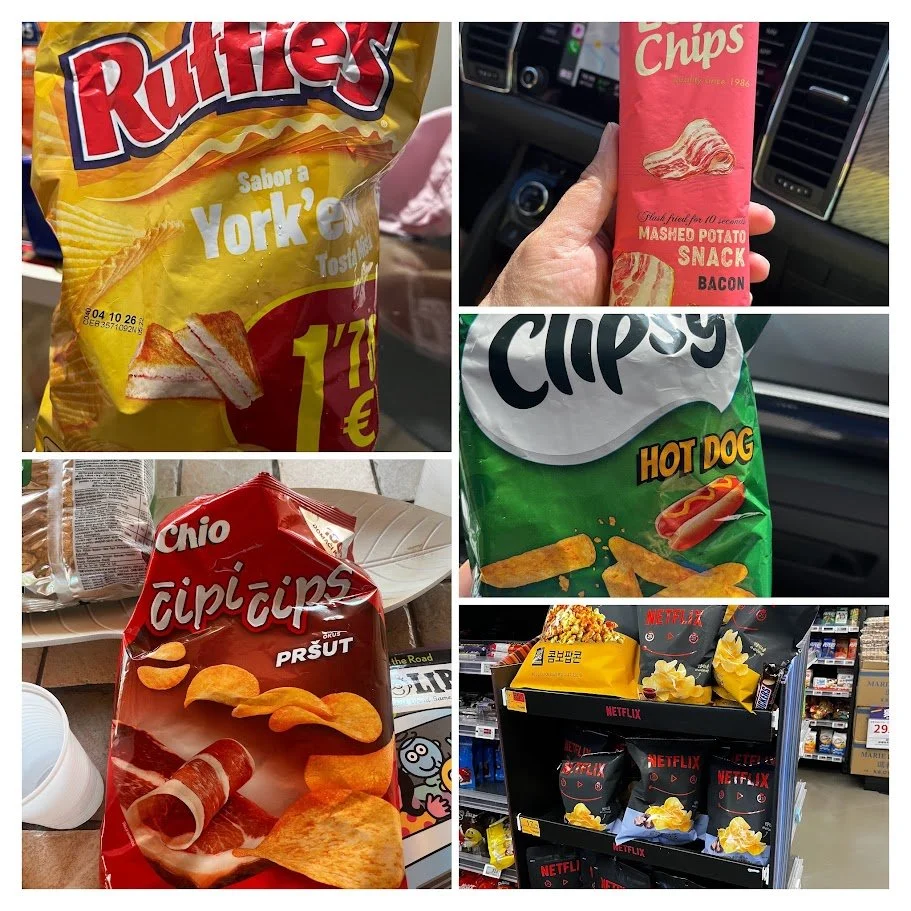
Hotdog flavor was definitely not a favorite.
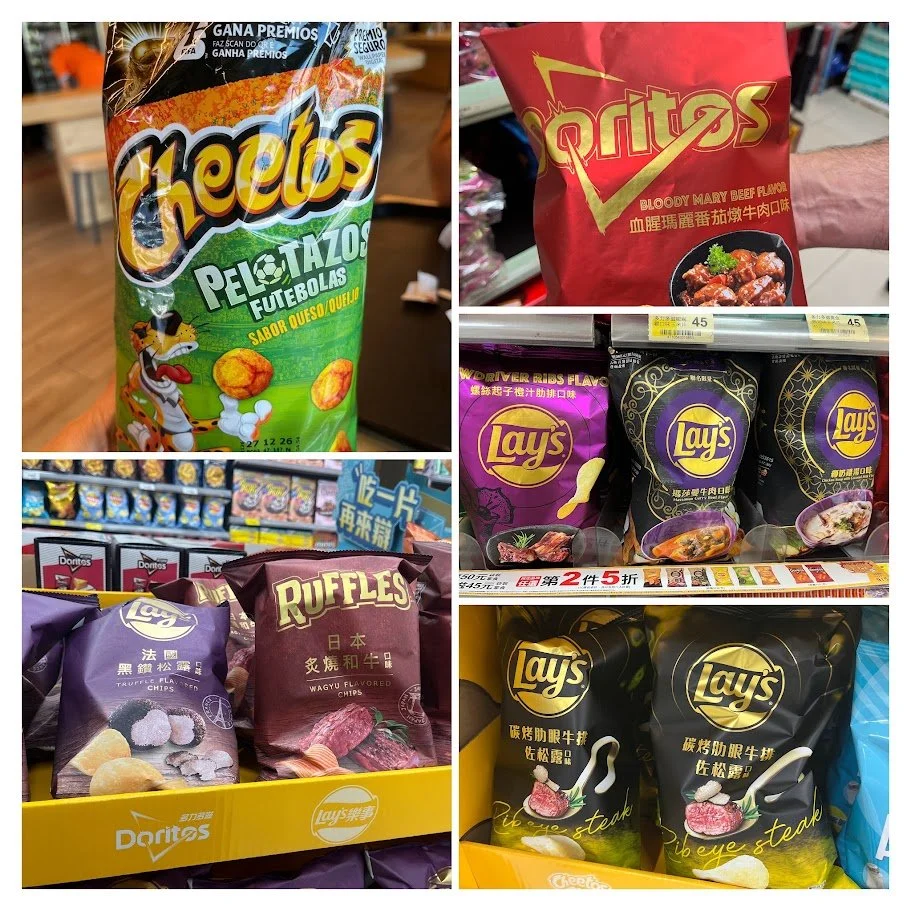
Beef flavored chips are quite popular globally.
Curiosity Is More Fun Than Comparison
It's easy to approach international foods by asking whether they're "better" or "worse" than what we're used to.
I think a more interesting question is, What does this tell us about the people who love it?
Flavor preferences don't appear out of nowhere.
They're built from family meals, local ingredients, traditions, holidays, availability, marketing, childhood memories, and countless previous eating experiences.
In other words, they're behavioral.
The same way we shouldn't expect consumers around the world to respond identically to products, we also shouldn't expect them to crave the same flavors.
Travel reminds us that our own preferences aren't universal, they're simply familiar.
The Best Souvenirs Aren't Always Things
Our chip ratings have become one of my favorite parts of traveling together as a family.
It's inexpensive.
It gets us into local grocery stores instead of only tourist attractions.
It gives the kids permission to be adventurous.
And perhaps most importantly, it starts conversations.
Sometimes those conversations are about whether Wagyu belongs on a potato chip.
Sometimes they're about why cilantro seems to divide people into two camps.
Sometimes they're about how one country's comfort food becomes another country's curiosity.
For me, that's what travel is supposed to do.
Not just show us different places, but help us notice that there are different ways to experience the world.
Sometimes all it takes is opening a bag of chips.
Brain Bite: Taste Is Never Just Taste
Our chip tradition is mostly just family fun, but there's a bigger reminder tucked inside the bag: what tastes "normal" to us isn't universally normal. Preferences are shaped by culture, familiarity, expectations, memories, and context.
That's important for anyone trying to understand consumers globally. Studying another market isn't just about translating a survey or testing the same product somewhere else. It's about understanding the experiences and cultural context that shape how people perceive, choose, and behave.
If you're working across markets and thinking about culture, sensory experience, and consumer behavior, reach out! I'd love to nerd out about it.
And if you've found a particularly strange (or surprisingly delicious) chip somewhere in the world, I want to hear about that too.
