

There is a particular kind of neuroscience story that is almost irresistible.
You put someone in a brain scanner (fMRI, fNIRS, etc.). You show them a brand, an advertisement, a food, a political candidate, or perhaps a picture of their ex. And voila, a colorful blob appears somewhere in the brain.
And suddenly… a headline: We found the love center.
Or the trust center.
Or the craving center.
Or the part of the brain that makes people buy things.
Welcome to what I like to call brain-region tourism.
It is the tendency to visit one interesting-looking spot on the brain, take a metaphorical selfie, and come home with a much bigger story than the data actually support.
And while those stories can make neuroscience wonderfully accessible, they can also make the brain seem much simpler, and much more deterministic, than it really is.

Reddit meme
The appeal of the colorful blob
I understand why brain-region stories are so compelling.
Brains are complicated. Regions are tangible.
It is much easier to say, "The amygdala is the fear center," than to explain that the amygdala participates in multiple interacting processes involving salience, relevance, learning, uncertainty, arousal, threat and reward, and that what its activity means depends on the task, the person, the timing, the rest of the network and the measurement being used.
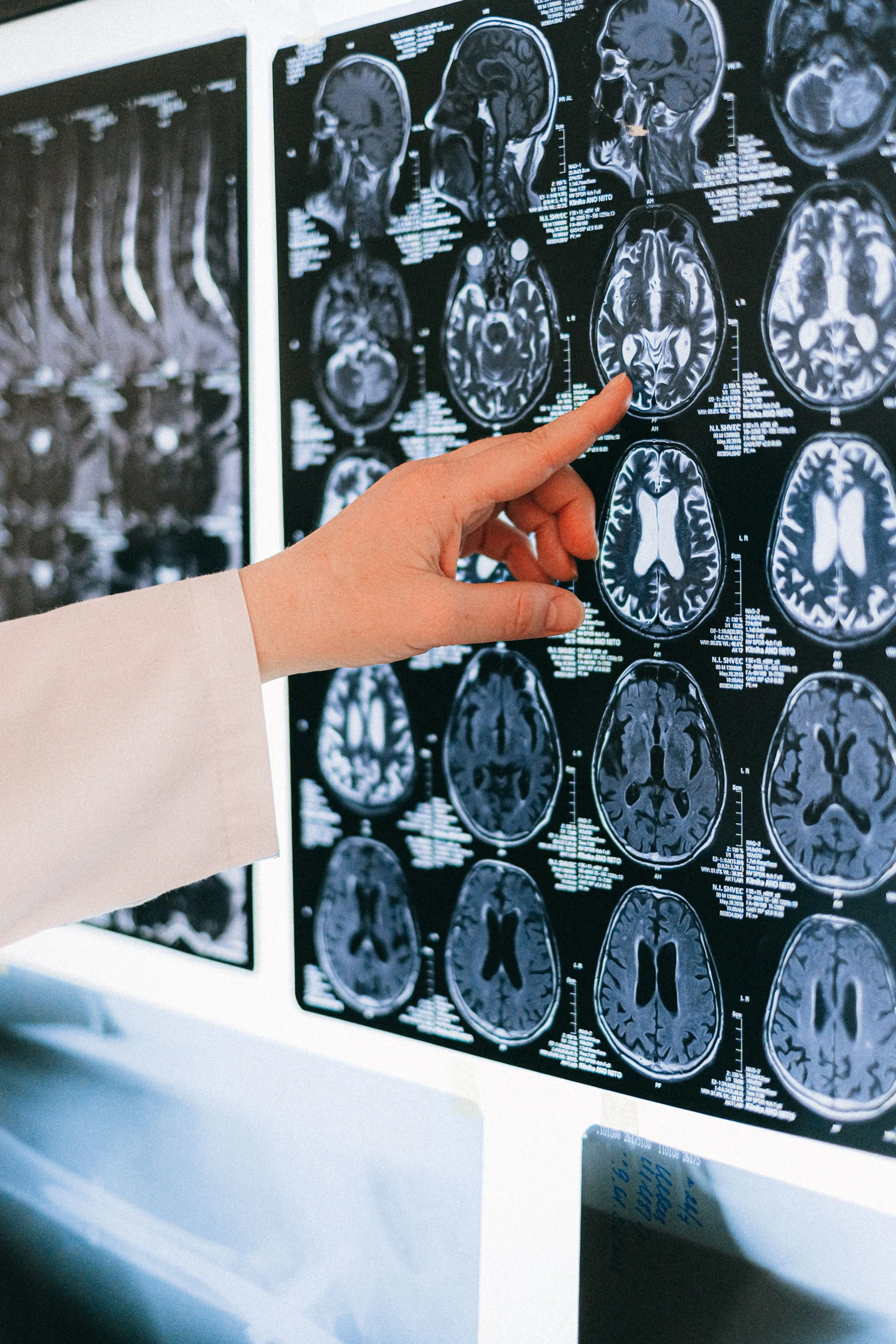
Signal to noise…
Reversing the Influence of Reverse Inference
The amygdala is practically the poster child for oversimplified neuroscience. It has been described as the brain's fear center for decades, despite substantial evidence that it participates in much more than fear—including learning, salience, uncertainty, threat detection, and processing biologically relevant information.
And there's an important lesson here: the amygdala's involvement in fear does not mean that amygdala activation is evidence that someone is experiencing fear.
Recently I noticed the amygdala popping up in neuroscience conversations again. One headline described the brain's "fear center" as having a second job: saving memories. But that framing perfectly illustrates the problem. The amygdala was never simply a fear center to begin with. The original research, the actual study (not the media around it), actually highlights how particular neurons participate in memory encoding and coordinate with other brain regions. Rather than discovering another button in the brain, we're uncovering more of the complexity of the system. And I think that's a much more interesting story.
Likewise:
The insula lit up, so they were disgusted.
The nucleus accumbens activated, so they wanted the product.
The prefrontal cortex was active, so they were thinking rationally.
The amygdala responded, so the advertisement caused fear.
The reward system activated, so consumers loved it.
The hippocampus activated, so they will remember it.
Each of these statements contains a little neuroscience truth.
And potentially a very large interpretive leap.
The problem isn't that these brain regions aren't important. They absolutely are. The problem is assuming that because a region participates in a particular psychological process, observing activity in that region tells us which psychological process is occurring.
That brings us to one of my favorite neuroscience cautionary tales: reverse inference.
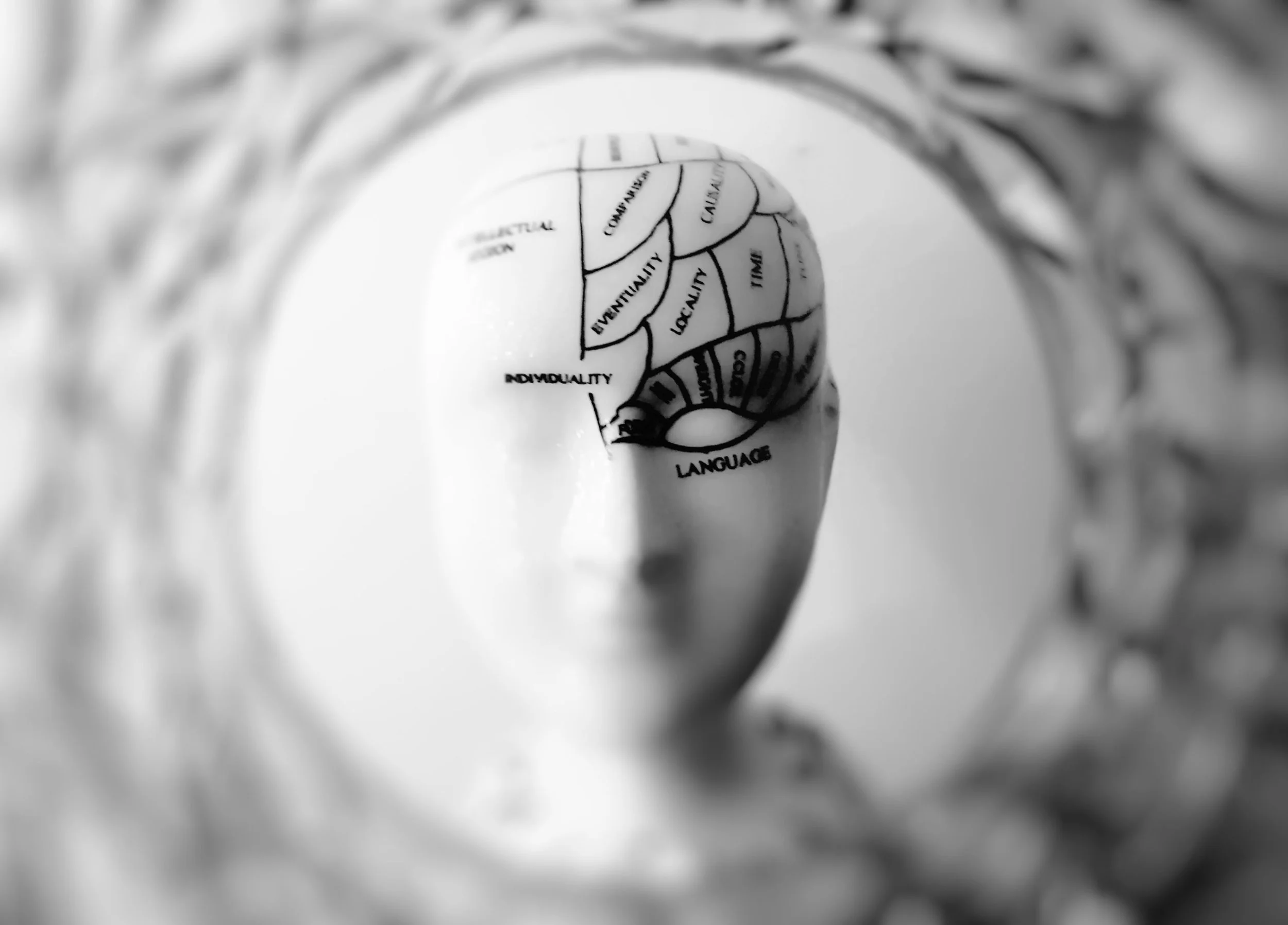
Phrenology is actually a really good example of reverse inference.
Your brain region activated. Now what?
Imagine that every time it rains, I carry an umbrella.
If you see me carrying an umbrella, can you conclude that it is raining?
Maybe.
But I might also be using it for shade. I might be carrying it because rain was forecasted for later. I might have just bought it because that’s my habit. Or perhaps my six-year-old handed it to me, and I've been carrying it around for three hours because that's apparently my job now.
The logic works in one direction much better than the other.
The same problem occurs in neuroscience.
If we know that a particular psychological process often involves activity in brain region X, it is tempting to see activity in region X and conclude that the psychological process must therefore be happening.
But brain regions rarely have only one job. (remember it’s got all this activity to control in just 3 pounds)
The insula, for example, is often invoked in stories about disgust. But it is also involved in interoception, pain, taste, bodily awareness, salience and other processes. Amygdala activity can accompany fear, but the amygdala is not simply a "fear button." Reward-related regions respond in ways that reflect learning, anticipation, prediction and motivational relevance and importantly not merely liking.
This matters enormously when neuroscience leaves the laboratory and enters consumer research, marketing, innovation or product development.
"The brain responded" is not the same thing as:
"We know what a consumer was experiencing."
Your brain isn't a collection of tiny departments
Another problem with brain-region tourism is that it encourages us to imagine the brain like an office building.
Fear happens on the third floor.
Memory is down the hall.
Reward is in accounting.
Decision-making is apparently handled by the prefrontal cortex, which sounds reassuring until you meet some of the decisions humans actually make.
But, in reality, brains don't really work that way. They can’t afford to. I’m going to write it up in a future blog post. But I recently attended the Wharton Neuroscience Initiative’s Annual Summit and had the privilege of hearing Earl K. Miller speak about what data centers could learn about efficiency from how the brain works.
Functions emerge through networks of interacting regions, often with the same structures participating in different networks depending on what we are doing. Sensory information interacts with memory. Memory interacts with emotion. Emotion changes attention. Attention changes what gets encoded. Expectations alter perception. Internal bodily states influence valuation. Social context changes meaning. Previous experience changes predictions.
And all of this unfolds dynamically over time.
The interesting unit of explanation is therefore often not:
"Where in the brain did something happen?"
but:
"What process is occurring, within what network, under what conditions, and how does that help explain the behavior we observe?"
That is a much harder question.
It is also a much more useful one.

That’s not the way it works
We are, essentially, electric meat
When I teach neuroscience to teams, I often like to start at the other end of the scale.
Before the beautiful brain images and colorful networks, there are neurons.
The human brain contains on the order of tens of billions of neurons (sometimes casually rounded toward 100 billion) with an almost incomprehensible number of connections among them (over 100 trillion). Those neurons communicate through electrical and chemical signals, continuously responding to both the outside world and the internal state of the body.
Which means that, at a very basic level, we are essentially electric meat.
I realize that isn't quite as poetic as the miracle of human consciousness. Maybe it sounds reductionist or depressing.
But I actually think it makes the brain more marvelous, not less.
From this biological machinery compacted into just 3 pounds emerges the ability to recognize your mother's voice. To crave a food you haven't eaten since childhood. To feel suspicious of a package without quite knowing why. To remember exactly where you were when something important happened. To fall in love. To learn a language. To imagine a future that doesn't exist yet.
And somehow, no two of us do all of those things in exactly the same way.
The wonder isn't that there is a little patch of brain responsible for each one.
The wonder is that there isn't.
We are all stardust
Complexity isn't a failure of neuroscience
I think sometimes we are afraid of complexity because it feels unsatisfying.
People want neuroscience to provide the biological answer underneath messy human behavior.
Did they like it?
Did they want it?
Will they remember it?
Will they buy it?
Surely somewhere inside that brain is the "real" answer.
But neuroscience doesn't eliminate the complexity of human behavior. It helps us understand where some of that complexity comes from.
Consider something as seemingly simple as tasting chocolate. The experience isn't just a flavor signal traveling to a "taste center." It also involves sensory processing, reward anticipation, learned associations, memory, attention, internal metabolic state, expectations created by packaging, social context and previous experiences with the brand.
Tell someone the chocolate is expensive and their experience may change.
Tell them it is healthier and their expectations may change.
Give it to them after lunch rather than when they are hungry and their response may change.
Give it to them on their birthday and it may eventually become part of a memory that has very little to do with the chemical composition of chocolate at all.
That isn't noise contaminating the "real" response.
That is the response.
From brain regions to mechanisms
None of this means we should stop studying brain regions.
Quite the opposite.
Understanding regional specialization has taught us an enormous amount about how brains work. Lesion studies, neuroimaging, electrophysiology, stimulation studies and decades of basic neuroscience have helped us understand the contributions of particular structures and circuits.
The problem begins when localization becomes explanation.
For applied researchers especially, I think the better move is to shift from asking:
"What brain region does this activate?"
toward asking:
"What mechanism might explain what we are seeing?"
Are expectations altering sensory processing?
Is attention being captured?
Is the experience violating a prediction?
Is something becoming motivationally salient?
Is a learned association being retrieved?
Is the person monitoring an internal bodily state?
Is the experience being encoded into memory?
And importantly: what other evidence would we need to support that interpretation?
A neural measure becomes much more powerful when it converges with behavior, self-report, physiology, context, and a well-specified theoretical prediction. Instead of treating the brain as an oracle revealing what people really think, we can use neuroscience as one lens among several for understanding the mechanisms shaping experience and behavior.

Let’s go explore!
The brain is more interesting than the map
There is nothing wrong with maps.
We need maps to orient ourselves.
But knowing where Paris is doesn't mean you understand France.
And knowing where the amygdala is doesn't mean you understand fear.
The danger of brain-region tourism isn’t just that it produces misleading neuroscience headlines. It also subtly changes how we think about people. It encourages us to reduce complex experiences to individual biological switches: the fear center, the pleasure center, the purchase button.
Humans are much stranger than that. Or maybe fascinating is a better term.
We are billions of neurons communicating across staggering networks of connections, embedded in bodies, environments, cultures, histories and social worlds. What we perceive changes what we remember. What we remember changes what we expect. What we expect changes what we experience. And what we experience changes what we do next.
Somehow, out of all that electrical and chemical activity emerges a person.
An individual person, even.
So by all means, visit the brain regions.
Just don't mistake the tourist map for the territory.
Because the really interesting neuroscience begins when we stop asking where the colorful blob is and start asking why this particular brain, in this particular body, in this particular context, produced this particular experience and behavior.
And if a pile of electric meat capable of asking that question isn't something to marvel at, I'm not sure what is.
Keep Being Curious
One of my favorite things about writing these posts is that I never quite know where the conversation will go next. I’ve had students from around the world reach out after reading something here to ask which neuroscience books they should start with or how they might find their own path into the field. I’ve had conversations with researchers and clients who started questioning the way a neuroscience tool or claim had been presented to them. And I’ve worked with teams who wanted to go a little deeper, to understand the science behind the colorful brain images and think more carefully about what these methods can, and cannot, tell us about people.
Those are exactly the kinds of conversations I love having.
Neuroscience is fascinating precisely because it is complicated. We don’t need to strip away that complexity to make it useful. We just need better ways to navigate it.
So, if something here made you curious, made you question a claim you’ve heard, or made you want to learn more about how neuroscience can actually be applied to understanding human experience and behavior, reach out. Whether you’re a student trying to figure out where to begin, a researcher trying to make sense of a method, or a team wondering whether the neuroscience you’ve been sold really supports the story being told, I’m always happy to nerd out about it.
After all, there are worse ways to spend an afternoon than talking about electric meat.
